If you’ve ever spent time on a shop floor, you’ve probably heard that old myth: horizontal machining centers (HMCs) are only for high-volume, simple, symmetrical parts—like engine blocks or gear blanks. Let me tell you, as someone who’s sold and serviced HMCs for over 18 years, that couldn’t be further from the truth. Last quarter, we had a customer in the aerospace sector call us in a panic. They had a titanium bracket for a satellite that had a profile so complex, their vertical machining center (VMC) team had spent three weeks on it, missed two critical tolerances, and was behind on a 90-day delivery window. They thought they’d have to subcontract the job at a steep premium—until they ran it on one of our HMCs. By the end of the first shift, they’d cut the 12-hour cycle time in half, and held every profile tolerance within ±0.0008 inches. That’s the kind of result that makes me want to pull the HMC off the shop floor and wave it around like a trophy, but I’ll save that for trade shows. Let’s break down exactly why HMCs can handle complex profiles, no matter what your team might have heard. Horizontal Machining Centers
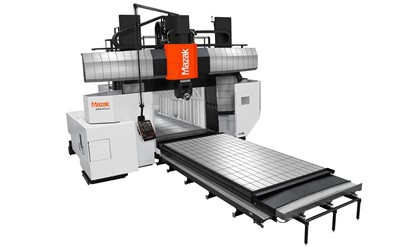
First, let’s start with the core design feature that makes HMCs the unsung heroes of complex part work: their work envelope orientation. Unlike VMCs, which use a spindle that moves up and down to cut parts mounted on a stationary table, HMCs rotate the spindle to align with a horizontally mounted part on a rotary table. That horizontal setup isn’t just a factory quirk—it’s a game-changer for accessing sides, curves, and internal features that VMCs can’t reach without multiple, time-consuming part setups. Think about it: a complex profile often isn’t just one surface. It might have a curved outer wall, an internal pocket with angled sides, and a series of small, precision holes arranged in a spiral. On a VMC, to hit all those features, you’d have to flip or re-clamp the part three or four times. Each setup brings a risk of alignment error, called “positional drift,” and each one adds hours to the job. On an HMC, the rotary table lets you rotate the part automatically—no manual handling, no re-clamping, no lost time. That single advantage alone cuts cycle time by 30 to 50% on average, even for the most twisted profiles.
But it’s not just the rotary table. HMCs have another key feature that VMCs struggle with: chip evacuation. When you’re cutting a deep, complex profile—especially in hard metals like titanium, Inconel, or tool steel—chips can get caught in narrow pockets or on angled surfaces. If they stay in the cut, they’ll scratch the part, break the tool, or even cause dimensional errors. VMCs often end up with chips falling back into the cut because of their vertical orientation. HMCs, though, mount the part horizontally, so gravity pulls chips straight down and away from the work area. Add in high-pressure coolant systems that blast chips out of hard-to-reach spots, and you’ve got a setup that keeps cutting smooth and consistent, even when you’re dealing with a profile that looks like it was drawn by a chaotic artist. I saw this firsthand with a mold maker customer last year. They were cutting a 3D cavity for a plastic bottle cap mold with undercuts and curved surfaces. Their VMC would get jammed with small aluminum chips every 15 minutes, requiring the operator to stop, clear the chips, and check the tool. On our HMC, the chips were gone before they even hit the table. They ran the entire 10-hour job unattended overnight, and the mold had zero chip-related defects.
Now, let’s talk about accuracy, because complex profiles don’t just need access—they need precision. When a part has a profile with tight tolerances, every move the spindle makes has to be consistent, from the first cut to the last. HMCs are built for rigidity, and that rigidity pays big dividends when you’re chasing ±0.001 inch tolerances. The horizontal spindle axis means less overhang when you’re reaching into deep pockets. On a VMC, a long spindle moving down into a deep cut can flex a tiny bit under load, especially in hard materials. That flex creates what’s called “cutter deflection,” which throws off your profile shape. On an HMC, the spindle is positioned parallel to the part’s rotary table, so the load is distributed evenly along the spindle’s length, not just at the end. Our HMC models also use linear guideways and heavy-duty cast iron frames that absorb vibration, which is another big plus for complex profiles. Vibration causes the tool to skip or vibrate during cutting, leaving a rough surface that requires extra finishing work. I had a customer in the medical device space a few months back—they were cutting a small titanium implant with a curved profile that had to be polished to a mirror finish. Their old VMC left a 12 microinch surface roughness that required two hours of manual polishing per part. On our HMC, the surface roughness came in at 6 microinches, so they only needed 15 minutes of polishing. That’s not just faster work—that’s a huge cost savings, especially when you’re producing thousands of parts.
Another thing that people overlook is pallet systems. Most modern HMCs come with automatic pallet changers (APCs) that let you load a new part on one pallet while the HMC is cutting another part on a second pallet. For a shop running a job with a complex profile, that means you can prepare the next part, check tool wear, and set up offsets during the current cut. No more waiting around for the machine to be ready to switch parts. This is a massive efficiency gain for high-mix, low-volume jobs, which are exactly where a lot of complex profiles live. Let’s say you have 10 different parts, each with a unique complex profile. On a VMC, you’d have to load, unload, adjust, and test each part one by one, with downtime between every job. On an HMC with an APC, you can program all 10 jobs overnight, and the machine will switch pallets automatically, running each part without operator intervention. That not only cuts down on labor costs, but it also keeps the profile consistent across every part, because the machine doesn’t have to be recalibrated between jobs as much. I worked with a job shop in Chicago that does a lot of custom aerospace brackets. They used to run these jobs on a VMC, where each batch of 20 parts would take two weeks to produce. After switching to our HMC, that same batch took three and a half days. They’re now expanding their shop floor just to keep up with the demand from HMC work.
Of course, no technology is perfect, and HMCs do have a learning curve—especially if you’re used to VMCs. Programming a complex profile on an HMC requires a different approach, because you have to account for the rotary table’s movement and the part’s orientation. But that’s not a barrier—it’s just a matter of training. We offer on-site training for every customer who buys an HMC from us, and we also have video tutorials and a 24/7 support line if you run into a snag. In fact, many of our most satisfied customers are shops that used to swear by VMCs, but realized they were leaving money on the table by not using HMCs for complex jobs. A common misconception is that HMCs are only for large, high-volume runs, but that’s changed a lot in the last five years. The rise of five-axis HMCs has made them even more versatile—now you can tilt and rotate the spindle and the table, giving you even more access to complex profiles without additional setups. Five-axis HMCs can cut a part in a single setup that would require three or four setups on a VMC, and hold tolerances that would be impossible on older three-axis VMCs. We’ve seen five-axis HMCs cut parts with profiles that are so intricate, they look like something from a science fiction movie—like turbine blades with twisted aerofoils, or custom prosthetics with curved, bone-matching surfaces.
Let’s get back to that customer I mentioned at the start—the aerospace shop that was stuck with a titanium satellite bracket. They thought HMCs were only for big, boring engine blocks, but they were wrong. The bracket’s profile had a curved outer wall, two internal pockets, and a series of small holes arranged in a pattern that was angled at 45 degrees. Their VMC would have required four setups, each taking two hours, and they would have missed the tolerance on the internal pockets. On our HMC, the rotary table let them rotate the part to every angle automatically, so they only needed one setup. The cycle time dropped from 12 hours to 5, and all tolerances were well within the customer’s specs. They were able to deliver the bracket on time, and even brought us a $200,000 follow-up order for 50 more brackets. That’s the kind of result that makes every late night troubleshooting a machine worth it.
If you’re still on the fence about whether an HMC can handle your complex profiles, here’s the bottom line: the design features that make HMCs great for high-volume parts—rotary tables, chip evacuation, rigidity, pallet systems—are exactly the features that make them great for complex profiles. They eliminate setups, reduce error, improve accuracy, and cut cycle time. I’ve seen HMCs cut everything from small medical implants to large aerospace components, all with complex profiles that would stop a VMC in its tracks.
If you’ve got a part that’s giving you headaches, or if you’re ready to upgrade your shop’s capability to handle more complex work, we can help. We’ve worked with hundreds of shops across every industry, from aerospace to medical to mold making, and we know how to match the right HMC to your specific needs. Whether you need a three-axis model for basic complex profiles or a five-axis HMC for the most intricate work, we’ve got the expertise to make it happen. Reach out today to set up a consultation, and we can even help you test your part on one of our demo machines to show you exactly what an HMC can do for your production.
Laser Processing Machine References
- Machining Data Handbook. Society of Manufacturing Engineers, 2020.
- "Horizontal Machining Centers for Complex Part Geometries." Modern Machine Shop, 12 Mar. 2022.
- aerospace and Defense Machining Trends Report. International Aerospace Manufacturing Group, 2023.
- Guide to Precision Machining of Hard Metals. SME, 2021.
Hermens Industrial Co., Ltd.
As one of the most professional horizontal machining centers enterprises in China, we’re featured by quality products and low price. Please rest assured to buy cheap horizontal machining centers in stock here and get quotation from our factory. We also accept customized orders.
Address: 9/59 Moo 14, Rachathewa , Bang Phli , Samut Prakan Province 10540
E-mail: liu_jincheng@hzhemen.com
WebSite: https://www.hermensindustrial.com/
