Hey there, if you’ve been around home energy storage systems for even five minutes, you’ve probably asked yourself (or us, let’s be real) one question more than any other: how long does it actually take to charge this thing? Because let’s be honest—you’re not just buying a fancy battery to stare at. You’re investing in peace of mind when the grid goes down, savings when electricity rates spike, and a way to make your solar panels work overtime for you. So I’m here to break this down like we’re hanging out over coffee, no confusing jargon, no corporate fluff, just real answers from a home energy storage supplier who’s been in this game long enough to hear every single customer’s question. Home Energy Storage
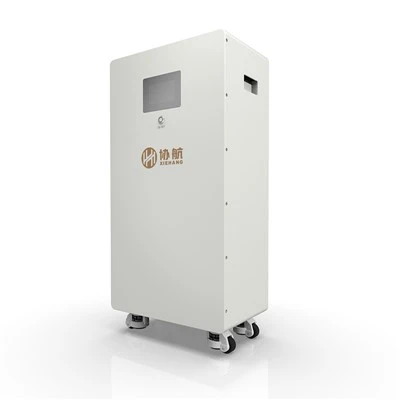
First off, let’s get one thing straight: there’s no one-size-fits-all answer here. That’s the boring, honest truth, and I’d rather tell you that up front than feed you some generic line that doesn’t apply to your setup. But don’t stress—once I walk through the main factors that move the needle, you’ll have a way better idea of what to expect for your specific system.
Let’s start with the most obvious one: how you’re charging the battery. Most home energy storage systems charge in two main ways: from your solar panels, and from the grid. Let’s tackle solar first, since that’s what most people care about if they already have solar (or are adding it). If you have a 6kW solar system, for example, on a perfect sunny day, that’s cranking out 6 kilowatts of power non-stop, right? So if your home battery is a 10kWh model (super common for small to mid-sized homes), that would take roughly 1.5 hours to charge fully. Wait, but hold on—no sun is perfect. If it’s a cloudy day, that same 6kW system might be putting out 2kW to 3kW tops. So that 10kWh battery could take 3 to 5 hours, or even longer, depending on how much cloud cover there is. If you only have a small 3kW solar system, yeah, that charge time jumps—more like 3 to 6 hours on a good day, maybe even a full day if it’s overcast. That makes sense, right? Solar isn’t a constant power source, so charging via panels depends entirely on how much sun you’re getting, what size your system is, and how efficient your solar inverters are.
Now for grid charging. That’s when you’re topping up your battery from the utility, usually when rates are low (like overnight, if you’re on a time-of-use plan) or if you need extra backup power before a storm. Grid charging is way more predictable because it’s a steady, controlled power source. Most home energy storage systems have a built-in charger that can handle different power levels—we typically offer models with 3.7kW, 7kW, and even 11kW chargers, depending on the size of the battery. Let’s do the math again: a 10kWh battery with a 3.7kW charger would take roughly 2.7 hours to go from empty to full. But if you spring for a faster 7kW charger, that same battery would be done in about 1.4 hours. Oh, and don’t sleep on the grid’s capacity at your home. If your electrical panel can only handle a certain amount of power, you can’t crank the charger to full speed even if the battery supports it. That’s a super common gotcha—we’ve had customers call us excited about a fast charger, only to realize their panel is old and can’t push more than 5kW. So that 7kW charger would be limited to 5kW, making the charge time around 2 hours instead of 1.4. Worth checking your panel specs before you dive into fast charging, trust me.
Next big factor: the size of your home energy storage battery. This one’s simple—bigger battery = longer charge time, all else equal. A 5kWh battery is perfect for small apartments or just powering a fridge and a few lights during an outage. That would charge way faster than a 20kWh model, which is what a lot of 4+ person homes go for if they want to power most essentials, maybe even a window AC unit. A 20kWh battery with a 7kW grid charger would take around 2.8 hours to fully charge, while that tiny 5kWh would take less than an hour. It’s just like a gas tank—bigger tank takes longer to fill, duh.
Wait, but there’s another thing that people don’t talk about enough: how full the battery is when you start charging, and how the battery management system (BMS) works. The BMS is basically the brain of your battery—it keeps it from overcharging, overheating, or getting damaged. So when you plug in a totally dead battery, the BMS might start with a lower charging rate to protect the cells, then bump it up once it’s stable. If your battery’s already 80% full, it’ll only need a top-up, so charge time is way less than charging from 0%. Also, most batteries have a “fast charge” limit for the last 20% of capacity. You might notice that charging from 0 to 80% takes an hour, and then the remaining 20% takes another hour—total 2 hours, instead of 1.2 with fast charging the whole time. That’s not a flaw, that’s the BMS doing its job to make your battery last 10+ years, which is way more important than a little extra time to top off.
Oh, and let’s not forget about real-world conditions that slow things down. Temperature is a huge one. If it’s super cold outside, like below freezing, your battery’s chemical reactions slow way down. So charging in cold weather can take 20-50% longer than in room temperature (around 20-25°C/68-77°F). Same with extreme heat—if your battery is sitting in a garage that’s 100°F in the summer, the BMS might dial back the charging rate to keep the cells from overheating, adding time to the process. That’s another reason we recommend installing your battery in a well-ventilated area, not a cramped, uninsulated closet or a hot attic. We tell all our customers that little setup tip goes a long way in keeping charge times consistent and your battery healthy.
Now, let’s get to what matters most to you: does this fit your needs? Let’s use a couple real customer examples from last month to make this concrete. First, Sarah, a homeowner in Phoenix, who has a 6kW solar system and a 10kWh battery. She runs her dishwasher, washer, and dryer during the day, so her battery’s usually around 20% by sunset. On a good sunny day, her battery charges from 20% to 100% in about 1.5 hours—she often has enough extra power left over to send a little back to the grid for credits. On a cloudy monsoon day, that same charge takes closer to 4 hours, so she might plug into the grid for an extra top-up overnight. That’s totally normal.
Another example: Mike, a guy in Chicago who doesn’t have solar, just a 15kWh battery for backup power and grid charging. He’s on a time-of-use plan where overnight rates are 3 cents a kWh, way cheaper than daytime. He uses the 7kW grid charger on his system, so charging from empty takes about 2.2 hours—he plugs it in right when the rate drops at 10 PM, and it’s fully charged by midnight, perfect for the next day. When there’s a winter storm and the grid goes down, his battery keeps his heat and fridge running for 2 full days, no problem.
Now, let’s bust a few common myths while we’re at it. Myth #1: Faster chargers are always better. Not necessarily—if you don’t have a big solar system or your panel can’t handle the power, a fast charger just sits there, not doing anything faster. It’s like buying a sports car engine for a rusted pickup truck; it won’t work the way you want. Myth #2: Solar charging is always slower than grid charging. If you have a huge 10kW solar system, that’s more than enough to charge a 10kWh battery in an hour, faster than most standard grid chargers. Myth #3: Your charge time is fixed forever. As your solar panels age (they lose about 1% efficiency a year), or if you add more panels, your charge time will change—usually get faster, which is a nice bonus.
Wait, what about charging during an outage? That’s another big one. If the grid is down, your home energy storage system will use its stored power, obviously, but can you charge it during that time? If you have solar panels, yes—you’ll be charging from the sun, which is great. If you don’t have solar, you can’t charge from the grid during an outage, that’s a safety rule for line workers. So that’s why solar paired with energy storage is such a winning combo for outages.
So, to wrap this all up, let’s break down the average charge times you can expect, so you have a baseline:
- Solar charging (10kWh battery, 6kW solar system): 1-2 hours on a sunny day, 3-5 hours on a cloudy day
- Grid charging (10kWh battery, 7kW charger): ~1.5 hours
- Grid charging (15kWh battery, 7kW charger): ~2.5 hours
- Grid charging (5kWh battery, 3.7kW charger): ~1.5 hours
But remember, these are averages. Your actual time will depend on the factors we talked about: your battery size, charger power, solar system size, weather, home panel capacity, and that smart BMS protecting your battery.
Now, if you’re still wondering what this means for your specific home, here’s the thing: we don’t do one-size-fits-all here. We work with every customer to figure out their energy needs, their solar setup, their electrical panel, and recommend the right system so charge times work for their lifestyle. Whether you want a fast charger to top up overnight, a bigger battery to handle your whole home, or solar that lets you charge for free during the day, we’ve got you covered.
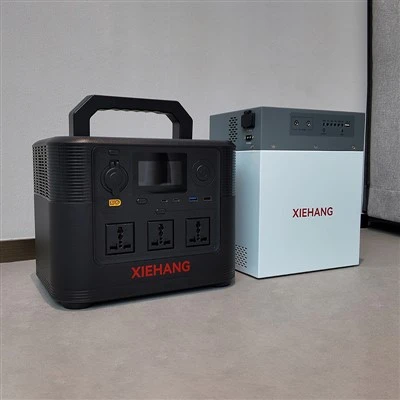
If you’re ready to chat about what home energy storage could do for you, how fast you could charge it, and how it’ll save you money on electricity bills and keep the lights on during outages, just reach out to our team. We’re not here to pressure you, we’re here to give you straight answers, no hidden fees, just real support for your home energy needs.
Home Energy Storage References:
- International Energy Agency. (2023). Home Energy Storage Systems: Technology, Performance, and Deployment Trends.
- U.S. Department of Energy. (2022). Battery Management Systems for Residential Energy Storage: Key Design Considerations.
- Solar Energy Industries Association. (2023). Grid Charging Performance and Best Practices for Residential Energy Storage.
- Institute of Electrical and Electronics Engineers. (2021). Effects of Ambient Temperature on Lithium-Ion Battery Charge Times in Residential Applications.
Zhejiang Xiehang New Energy Equipment Co., Ltd.
As one of the most professional home energy storage manufacturers and suppliers in China, our products have good reputation in the market. Please erst assured to wholesale custom made home energy storage from our factory. If you have any enquiry about cooperation, please feel free to email us.
Address: No.5 Hechen Road, Zhouwangmiao Town, Haining, Jiaxing City, Zhejiang Province, China
E-mail: dan.wu@xiehang.net
WebSite: https://www.shineonpower.com/
