Hey everyone, let’s cut to the chase—if you’ve ever dealt with wired sensor switches, the first question that pops up (after “does this fit my setup?”) is almost always: “How far can this thing actually reach?” I get it, because when you’re setting up anything from a home security system to a commercial lighting grid, guessing the sensing range is a fast track to disaster. You either end up with a blind spot that lets a package walk right through, or you waste money on extra sensors because you overestimated how well they work. As someone who’s been supplying wired sensor switches for over 10 years now, I’ve heard every single take on this question—some right, some way off base. Today, I’m breaking this down like I would for a new installer sitting across my desk, no fancy jargon, no fluff, just the real deal. Wired Sensor Switch
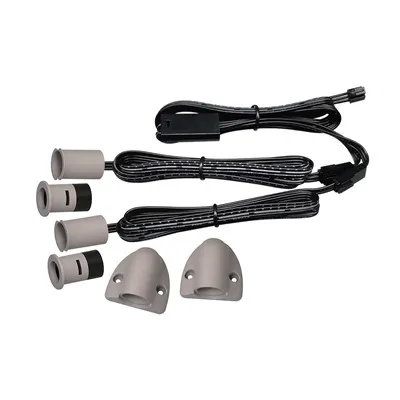
First off, let’s get one thing straight: there’s no one-size-fits-all number here. I see so many brand websites slapping a “50-foot range” on their product pages like it’s a universal law, but that’s garbage. The sensing range of a wired sensor switch depends on four core factors, and ignoring any one of them will leave you with a sensor that doesn’t work when you need it most. Let’s walk through each, because this is where the rubber meets the road.
First, the type of sensor element. Wired sensor switches aren’t one monolith—they use different tech to pick up signals, and each has totally different range capabilities. Let’s keep this simple: the two most common types are passive infrared (PIR) and ultrasonic. PIR is the one that picks up heat from moving bodies, right? The average range for a good quality PIR wired switch is between 15 and 30 feet when it’s installed correctly. Wait, before you yell at me—yes, I’ve seen cheap no-name ones that top out at 10 feet, and commercial-grade ones that go up to 40, but 15-30 is the sweet spot for most residential and small business setups. Now ultrasonic—those work by sending out sound waves and measuring the echo, like a bat. Their range is a bit shorter, usually 10 to 25 feet, but they’re way better for weird-shaped spaces because they pick up movement through solid objects a little better than PIR (though not perfect). There’s also the less common contact sensor, which is for doors and windows—those have a sensing range of basically zero, wait no, not really—they only work when the two magnets are within half an inch of each other, that’s a whole different animal. I always tell customers: if you need to detect a person walking across a room, go PIR. If you need to pick up movement around a corner or through a thin wall, ultrasonic. But don’t mix up their ranges.
Second factor: mounting height and angle. This is the part that 90% of installers get wrong, and it kills range faster than anything. I can’t tell you how many times I’ve had a customer call me complaining their sensor only works 10 feet away, and when I ask where they mounted it, it’s 10 feet high on a ceiling pointed straight down. Wait, that’s the worst angle for PIR! Most wired sensor switches are designed to work best at 7 to 9 feet high, tilted so the field of view is a wide, low cone, not a narrow straight line. If you mount it on a 10-foot ceiling pointing down, the sensing range drops by half because the heat waves from a person don’t hit the sensor’s detectors evenly. Tilt it 15 degrees down, though? Suddenly you’re hitting that full 25-foot range I mentioned earlier. Same with angle sideways—if you mount it on a wall, don’t point it straight at the floor or ceiling, adjust it so the center of the field is at around 3 feet high, that’s where people or pets move, so the sensor picks up their heat best. I once had a customer mount a sensor 12 feet high in a warehouse because they thought higher = more range—turns out it could only detect movement within 5 feet of the wall, I had them move it to 8 feet high, adjusted the angle, and boom, it worked perfectly at 25 feet. That’s the kind of mistake that makes people think wired sensor switches are bad, when they just installed them wrong.
Third: environmental interference. This is the wildcard that no website talks about. Range isn’t a fixed number because your space isn’t a vacuum. Walls, furniture, even dust or hot air vents will mess with the signal. For PIR sensors, heat sources like space heaters, sun coming through a window, even a hot TV can create false readings and shrink the actual working range. I had a customer in Arizona set up a sensor near a south-facing window that got direct sun all day—their sensor worked fine for 2 feet, then stopped. We moved it 10 feet away from the window, and suddenly it hit 28 feet, almost the full rated range. For ultrasonic sensors, solid objects like concrete walls, metal shelves, or even thick curtains will block the sound waves. So if you’re setting up a sensor in a space with a lot of metal equipment, you’re looking at a 20-30% drop in range, no question. And don’t forget about temperature extremes—if you’re installing a wired sensor switch in a unheated garage or an outdoor shed, the sensor’s own components don’t work as well when it’s way below freezing or way above 90, so range drops. For indoor residential use, that’s rarely an issue, but commercial outdoor setups? You have to account for that.
Fourth: wire quality and signal type. Wait, it’s a wired sensor switch, so why does wire matter? Because not all wired setups are the same. Some switches use low-voltage wires that carry the sensor’s signal, and if you’re using thin, cheap wire that’s too long, the signal weakens before it even gets to the control panel. The general rule for wired sensor switches: keep the total wire length between the sensor and your control hub under 100 feet for most standard setups. If you need longer, you either need a thicker gauge wire (18-gauge is the minimum, 16-gauge if you’re going over 80 feet) or a signal amplifier, which is a tiny add-on we supply a lot of for large commercial buildings. I’ve had a customer try to run a sensor wire 150 feet with 22-gauge wire, and the sensor would only trigger if something was touching it, no exaggeration. Swapped to 16-gauge, kept it at 140 feet, and it worked flawlessly at 25 feet range. That’s another common mistake—people skimp on wire and wonder why their wired setup is worse than a random cheap wireless one. Spoiler: it’s not the tech, it’s the wire.
Now, let’s get to the real-world numbers, not the marketing fluff. For a residential setup—say, a sensor for your living room, installed 8 feet high, tilted correctly, no weird heat sources or blockages—you’re looking at a reliable sensing range of 18 to 28 feet. That means if you’re 20 feet away, walking across the room, it will trigger every time, no missed detections. For a small office or retail space, same installation, range is 15 to 25 feet, but if you have metal racks or concrete pillars, knock that down to 12 to 20 feet. For a large warehouse or commercial space, if you mount sensors at 10 feet high with proper angle, use 16-gauge wire, keep it under 80 feet from the hub, you’re looking at 20 to 30 feet range, adjusted for whatever obstructions are there. And for contact sensors on doors and windows? Their “sensing range” is literally just the gap between the two magnets—usually 3/8 of an inch, that’s it. They don’t need to detect movement, just when two parts separate.
I also get a lot of questions about can you extend the range of a wired sensor switch? The short answer is, yes, but only to a point. You can add amplifiers to boost the signal over longer wires, you can upgrade to higher-grade sensor elements (like commercial PIRs that go up to 40 feet range), you can adjust the mounting height and angle to cover blind spots, and you can clear out obstructions near the sensor. What you can’t do is take a 25-foot range sensor and stretch it to 50 feet, no matter how many adapters you buy. That’s a marketing lie, plain and simple.
Let me share a quick success story to put this all in perspective. Last year, a small café in Chicago contacted me because their old wired sensor switches kept triggering only when someone was right next to the door, which was bad—they wanted them to trigger when someone walked in the front entryway, which was 22 feet from the sensor location. We went out to check their setup, and they had the sensor mounted 12 feet high on the side wall, pointed directly at the door (bad angle), and they were using 22-gauge wire that ran 160 feet to the control panel (too long, too thin). We swapped them to 16-gauge wire, moved the sensor to 8 feet high, tilted it 15 degrees down toward the entryway, and adjusted the control hub’s sensitivity settings. Suddenly, the sensors were reliably detecting movement at 23 feet, exactly what they needed. They ended up ordering 12 more sensors for their back office and storage room. That’s the kind of solution I live for—fixing people’s frustrations by talking through the actual range factors, not just spitting out a marketing number.
Now, let’s talk about the difference between wired vs wireless sensing ranges, just to clear up another confusion. A lot of people think wireless is better because their marketing says “150 feet range,” but that’s open air, no walls, no interference. Wired sensor switches have more consistent range because the signal isn’t bouncing off walls or competing with Wi-Fi or Bluetooth signals (that’s another interference factor—if your wireless sensor is near a Wi-Fi router, its range drops too). Wired might top out at 30 feet, but that’s reliable, every time, no dead zones, no signal drop, no interference. For commercial setups, that consistency is way more important than a theoretical 150 feet that only works in empty fields.
So, to wrap this up—what’s the sensing range of a wired sensor switch? It’s not a number. It’s a range that depends on the sensor type, how you mount it, what’s around it, and how you wire it. For 90% of residential and small commercial setups, you can count on 15 to 30 feet of reliable sensing range if you install it right. For larger spaces, adjust for height, wire gauge, and obstructions, and you’ll get consistent performance.
If you’re setting up a new system, or your current sensors aren’t triggering where you need them, don’t guess. Reach out to me—we can talk through your space, figure out what sensor type you need, the right mounting and wiring, so you get the range you actually need, not the one on a product page. No sales pitch, just real advice from someone who’s been doing this for years.
LED Driver References
- National Electrical Manufacturers Association (NEMA). Standard for Low-Voltage Control Circuits in Building Automation. 2021.
- Sensor Technology Council. Passive Infrared (PIR) Sensor Range and Environmental Interference Guidelines. 2022.
- Underwriters Laboratories (UL). Safety Standard for Wired Sensor Switches for Commercial and Residential Use. 2020.
- Industrial Controls Association. Best Practices for Wiring Low-Voltage Sensor Circuits. 2021.
Dongguan Lanbaoli Intelligent Technology Co., Ltd.
As one of the most professional wired sensor switch manufacturers and suppliers in China, we’re featured by quality products and low price. Welcome to buy advanced wired sensor switch for sale here from our factory. If you have any enquiry about quotation, please feel free to email us.
Address: 10th Floor, Building 32, Golden Town, No. 7 Technology Avenue, Houjie Town, Dongguan City, Guangdong Province
E-mail: anna@lampow.cn
WebSite: https://www.lblsensor.com/
