As a supplier of YVF2 Variable Frequency Motors, I’m often asked about the harmonic content of these motors. Understanding the harmonic content is crucial for both the proper operation of the motor and the electrical system it’s connected to. In this blog post, I’ll delve into what harmonic content is, how it relates to YVF2 Variable Frequency Motors, and its implications for users. YVF2 Variable Frequency Motor

What are Harmonics?
Before we get into the specifics of YVF2 motors, let’s first understand what harmonics are. In an electrical system, a pure sinusoidal waveform represents the fundamental frequency, typically 50Hz or 60Hz depending on the region. Harmonics are multiples of this fundamental frequency. For example, the 2nd harmonic is twice the fundamental frequency, the 3rd harmonic is three times the fundamental frequency, and so on.
Harmonics are generated when non – linear loads are present in an electrical circuit. Non – linear loads draw current in a non – sinusoidal manner, which distorts the voltage and current waveforms. Common sources of non – linear loads include variable frequency drives (VFDs), which are an integral part of YVF2 Variable Frequency Motors.
Harmonic Content in YVF2 Variable Frequency Motors
YVF2 Variable Frequency Motors are designed to work in conjunction with variable frequency drives. These drives are used to control the speed of the motor by changing the frequency of the electrical power supplied to it. However, the switching operation of the VFD’s power semiconductor devices, such as insulated gate bipolar transistors (IGBTs), generates harmonics.
The harmonic content in YVF2 motors can be characterized in terms of current harmonics and voltage harmonics. Current harmonics are typically more of a concern as they can cause several issues in the electrical system.
Current Harmonics
The current harmonics in a YVF2 motor system are mainly due to the pulse – width modulation (PWM) technique used by the VFD. The PWM switch creates a series of voltage pulses that approximate a sinusoidal waveform at the desired frequency. But this process results in high – frequency current components that are harmonics of the fundamental frequency.
The magnitude and distribution of current harmonics depend on several factors. The type of VFD, the switching frequency, the load characteristics of the motor, and the impedance of the electrical supply system all play a role. For instance, a higher switching frequency in the VFD can reduce the amplitude of some of the lower – order harmonics but may increase the higher – order harmonics.
Voltage Harmonics
Voltage harmonics are a consequence of current harmonics flowing through the impedance of the electrical system. When the non – sinusoidal current generated by the YVF2 motor and its VFD flows through the system impedance, it causes voltage drops that distort the voltage waveform. Voltage harmonics can affect other electrical equipment connected to the same power system. For example, they can cause overheating in transformers, misoperation of relays, and interference with communication systems.
Effects of Harmonics on YVF2 Variable Frequency Motors
The harmonic content in YVF2 motors can have several effects on the motor itself and the overall electrical system.
On the Motor
- Overheating: Harmonic currents cause additional losses in the motor windings and core. These losses are mainly due to the increased resistance at higher frequencies (skin effect) and the eddy – current losses in the core. The additional heat generated can reduce the motor’s efficiency and lifespan. If the motor is not properly rated to handle the harmonic – induced heat, it may lead to premature insulation failure.
- Torque Pulsations: Harmonic voltages can cause torque pulsations in the motor. These pulsations can lead to mechanical vibrations, which not only increase the wear and tear on the motor’s bearings and other mechanical components but also generate noise. Excessive vibration can also cause problems in the driven equipment, reducing its reliability and performance.
On the Electrical System
- Power Factor Degradation: The presence of harmonics can significantly reduce the power factor of the electrical system. A low power factor means that the system has to draw more current to deliver the same amount of real power, increasing the energy losses in the distribution network. This can result in higher electricity bills for the user and may also require the installation of additional power factor correction equipment.
- Interference with Other Equipment: As mentioned earlier, voltage harmonics can interfere with other electrical and electronic equipment connected to the same power system. This can lead to malfunctions, data errors, and reduced equipment lifespan.
Managing Harmonic Content in YVF2 Variable Frequency Motors
To mitigate the negative effects of harmonics, several measures can be taken.
Filtering
- Passive Filters: Passive filters are the most common method for reducing harmonic currents. These filters consist of inductors, capacitors, and resistors and are designed to provide a low – impedance path for specific harmonic frequencies. By diverting the harmonic currents away from the main electrical system, passive filters can effectively reduce the harmonic distortion.
- Active Filters: Active filters are more advanced and can dynamically adjust to the changing harmonic content in the system. They work by injecting equal and opposite harmonic currents into the system to cancel out the harmonics generated by the YVF2 motor and its VFD. Active filters are more expensive than passive filters but offer better performance, especially in systems with complex and variable harmonic loads.
VFD Design
Improvements in VFD design can also reduce the harmonic content. For example, some modern VFDs use multi – pulse input rectifiers. A 12 – pulse or 18 – pulse rectifier can significantly reduce the lower – order harmonics compared to a standard 6 – pulse rectifier. Additionally, advanced control algorithms in the VFD can optimize the switching process to minimize harmonic generation.
Importance of Understanding Harmonic Content for Users
For users of YVF2 Variable Frequency Motors, understanding the harmonic content is essential for several reasons.
- Energy Efficiency: By managing the harmonic content, users can improve the power factor of their electrical system, reducing energy losses and lowering electricity costs. A more energy – efficient system also has a smaller environmental footprint.
- Equipment Reliability: Reducing harmonics helps to prevent overheating, torque pulsations, and interference with other equipment. This extends the lifespan of the motor and other electrical components, reducing maintenance costs and downtime.
- Compliance: Many countries and regions have regulations regarding the allowable harmonic distortion in electrical systems. By understanding and managing the harmonic content of their YVF2 motors, users can ensure compliance with these regulations and avoid potential fines.
Why Choose Our YVF2 Variable Frequency Motors
As a supplier, we are committed to providing high – quality YVF2 Variable Frequency Motors with minimized harmonic content. Our motors are designed with the latest technologies to reduce harmonic generation from the source. We also offer solutions for harmonic mitigation, such as passive and active filters, to help our customers manage the harmonic effects in their electrical systems.
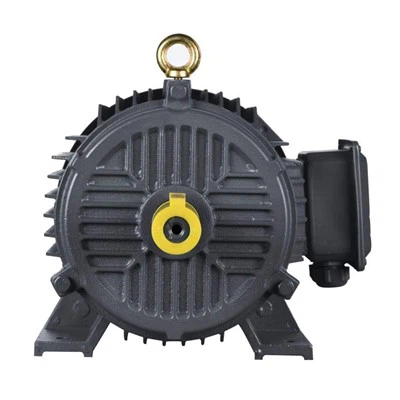
Our team of experts can provide technical support to help you select the right motor and harmonic mitigation solutions for your specific application. We understand that every customer’s needs are unique, and we work closely with you to ensure that our products meet your requirements.
YVF2 Variable Frequency Motor If you are in the market for YVF2 Variable Frequency Motors, or if you have any questions about harmonic content and its management, we encourage you to contact us. We look forward to discussing your needs and providing you with the best solutions for your business.
References
- Electric Machinery Fundamentals, Stephen J. Chapman
- Power System Harmonics: Concepts, Analysis and Filter Design, Arindam Ghosh and Gerard Ledwich
Taizhou Goodpump Trading Co., Ltd.
We’re well-known as one of the most professional yvf2 variable frequency motor enterprises in China, featured by quality products and good service. Please rest assured to buy discount yvf2 variable frequency motor in stock here from our factory. For quotation, contact us now.
Address: No. 38, District 6, Zhengye Village, Lunan Street, Luqiao District, Taizhou City, Zhejiang Province, China
E-mail: 19548175755@163.com
WebSite: https://www.goodpump-cn.com/
