If you’ve ever ordered anything online, shipped a product, or even just sent a care package to a friend, you’ve probably wondered about those plain, corrugated boxes that show up on your doorstep—and right now, as a paper box supplier who’s worked with small businesses, big retailers, and everyone in between for nearly a decade, that’s a question I get all the time: What are the dimensions of a standard paper box? Paper Box

It’s not a trivial question, either. Get the size wrong, and you’re either paying too much for shipping (box too big means wasted space in every pallet and every delivery truck) or risking your products getting crushed (box too small means you have to overstuff it, or it doesn’t offer enough cushion for fragile items). I’ve seen this play out so many times: a new e-commerce client will come to me wanting a “standard box” for their new line of handmade mugs, and they’ll have no clue that “standard” varies depending on who’s using it, what it’s holding, and even where it’s being shipped.
Let’s start with the basics, because a lot of people mix up the two main types of paper boxes we talk about in the industry: folding paper boxes (the ones that are flat when you get them, folded up to hold things like cereal, jewelry, or retail cosmetics) and corrugated shipping boxes (the sturdy, wavy cardboard ones you use for moving, storing, or mailing bulk goods). The “standard” for each is totally different, and as a supplier, I need to make sure I’m clear about that with every client who walks through my door.
First, folding paper boxes—these are the ones that are super common in retail settings, designed to be printed on, stacked on shelves, and light enough for small items. The most widely used standard here comes from the Fiber Box Association, a non-profit that sets guidelines for packaging in North America. For these folding boxes, the standard dimensions are usually referred to as “rigid” or “set-up” box sizes, but the most universal range is between 2 inches (length) x 1.5 inches (width) x 0.5 inches (depth) up to 12 inches x 10 inches x 5 inches. Wait, why that range? Because most small retail products fall into that gap: lipsticks, jewelry boxes, small candles, even phone cases. If you need something smaller than that, we make custom sizes, but anyone who asks for a “standard folding box” is almost always looking for something in that 2 to 12 inch range, no extra weird measurements.
But corrugated boxes—those are the workhorses of shipping, and here’s where “standard” gets even more specific, because there’s something called the “corrugated board industry standard” (often called BC style, since it’s from the Box Manufacturers Association). The most common standard corrugated shipping boxes we supply are in what we call “1-2-3 series” sizes, which are meant to fit common packing needs. Let’s break those down: the 1-series is the smallest standard shipping box, usually 6 inches x 4 inches x 4 inches. That’s perfect for things like a stack of t-shirts, a few books, or a small electronic accessory. The 2-series is the middle ground, 12 inches x 10 inches x 8 inches—this is the workhorse for most e-commerce brands, the size you’ll get if you order a pair of shoes, a laptop, or a batch of handmade candles. Then there’s the 3-series, which is the largest standard size, 24 inches x 18 inches x 12 inches. That’s the box you’d use for moving a set of dishes, a small appliance, or a bulk shipment of retail products.
Wait a second, I know what some of you are thinking: what about international standards? Because I’ve had clients from Europe, Australia, and even parts of Asia ask for standard boxes that fit their regional shipping rules. For international shipments, the ISO (International Organization for Standardization) sets a slightly different set of standard dimensions, focused on pallet compatibility, because that’s where so much of the cost gets wasted. The most common ISO standard for shipping boxes is 400mm x 300mm x 200mm, which is roughly 15.7 inches x 11.8 inches x 7.9 inches. That size fits perfectly on a standard euro pallet, so you don’t have gaps that make the pallet unstable or waste space during long-haul shipping. I always tell my clients that if they’re selling to customers outside of North America, asking for ISO standard dimensions is a safe bet, because it cuts down on shipping surcharges and makes your products easier for your overseas partners to handle.
But here’s a secret I’ve learned after years in this business: “standard” is a term that means different things to different people, and if you just say “give me a standard paper box,” you’re going to end up with something that doesn’t work for your needs. Last year, a client came to me saying they needed a “standard box” for their new line of organic granola bars. They’d seen someone else use a 12x10x8 box, so that’s what they ordered. Turns out, their granola bars were only 8 inches long, so the box was half empty—they were paying $2 more per box for shipping than they needed to, and when they stacked them on their retail shelves, they took up twice as much space as they should have. I switched them to our standard folding box size of 10x6x2, which fit exactly 12 granola bars, cut their packaging costs by 18%, and they still reorder from me every month. That’s the kind of thing that makes me love this job—helping someone avoid a costly mistake because they didn’t realize “standard” isn’t one-size-fits-all.
Another thing that’s important to note: paper box dimensions aren’t just about length, width, and height. We always measure from the inside, not the outside, because that’s the space that matters for the contents. A lot of new suppliers (or even some big box stores) will tell you the outside dimensions, which can be a difference of a quarter inch or more, and that’s enough to make a box too tight or too loose. For example, a 12x10x8 inside dimension box will actually be about 12.25×10.25×8.25 on the outside, because the corrugated board has thickness. If you don’t account for that, you might think a box fits a 12-inch product, but it doesn’t. I always make a point to tell every client that when we quote dimensions, we’re giving them the interior measurements—no hidden tricks, that’s just how we do business.
And what about specialty paper boxes? Because it’s not just shipping boxes and retail folding boxes. We make boxes for things like wine bottles, which have their own standard. A standard wine paper box is usually 14 inches x 4 inches x 4 inches, which fits exactly one 750ml wine bottle, with a little extra space for bubble wrap at the top if needed. For two wine bottles, the standard is 14x8x4. Those are so common that most liquor stores and wine distributors order them as standard, no custom measurements needed. I once had a client who sold craft beer, and he tried to use a standard 12x10x8 box for a six-pack, which worked, but the standard wine-sized six-pack box is 12x8x5, which is lighter, uses less material, and fits perfectly in a fridge shelf—he switched to those and saved another 10% on his monthly packaging costs.
I also want to talk about why standard dimensions matter beyond just fitting products. As a supplier, holding standard sizes in stock means I can keep costs lower for my clients. If I have to cut, print, and assemble a custom size every time, that takes more time and more materials, which gets passed on to the client. Standard sizes are mass-produced, so they’re cheaper, faster to ship, and easier to handle. For small businesses, that’s a huge deal—every dollar saved on packaging is a dollar that can go back into marketing, product development, or paying their staff. For large retailers, standard sizes mean they can ship more products per pallet, which cuts down on fuel costs and carbon emissions, too. It’s a win-win for everyone, as long as you’re using the right standard for your use case.
Wait, but what if none of the standard sizes work for you? That’s where custom boxes come in, of course. I’d be lying if I said we never do custom sizes—last month, we made paper boxes for a small pottery studio that needed a box to fit their 10-inch diameter bowls, with extra padding slots on the sides. Those aren’t standard, but they were specific to their products, so it made sense. The key is knowing when to use standard and when to go custom. If your product fits one of the sizes I mentioned earlier, go standard. If it’s oddly shaped, oversized, or fragile, custom is the way to go. I always tell clients to send me a quick note with their product dimensions and intended use (shipping, retail, storage), and I can point them to a standard size that will work, or explain if custom is a better fit.
Over the years, I’ve seen a lot of trends in paper box dimensions. During the pandemic, for example, a lot of small e-commerce brands popped up, and they all needed standard boxes for shipping masks, hand sanitizer, and small medical supplies. We kept our stock of the 6x4x4 1-series box at 30% more than usual that year, and we were able to deliver to clients within 24 hours, which kept them from running out and losing sales. Another trend: more and more brands are moving to “right-sized” packaging, which means using the smallest possible box that fits their product, to reduce plastic waste and lower shipping costs. That’s a trend I’m 100% behind, and it starts with knowing what standard dimensions are available, so you don’t oversize your box by accident.
If you’re a business owner, an individual who needs boxes for moving, or anyone who’s curious about paper boxes, here’s a quick cheat sheet I keep taped to my desk at the office:
- Small folding paper box: 2”x1.5”x0.5” to 6”x4”x2” (perfect for jewelry, small parts, lipsticks)
- Medium folding paper box: 6”x4”x2” to 12”x10”x5” (great for candles, phone cases, small apparel)
- Standard shipping corrugated box (North America): 6”x4”x4” (1-series), 12”x10”x8” (2-series), 24”x18”x12” (3-series)
- Standard shipping corrugated box (international): 15.7”x11.8”x7.9” (ISO standard, fits euro pallets)
- Single wine bottle box: 14”x4”x4”; two-bottle: 14”x8”x4”
I know this is a lot, but it’s the stuff I wish I’d known when I started in this business 12 years ago. I used to quote clients the wrong size all the time, until I realized that “standard” isn’t a single number—it’s a set of ranges tailored to what you’re using the box for.
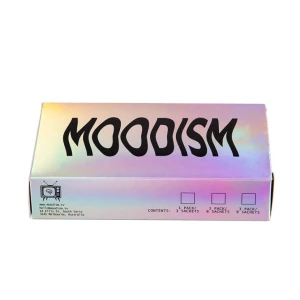
If you’re a business looking to source paper boxes, whether you need standard sizes to keep your costs down or custom sizes for your unique products, I’m here to help. I’ve worked with everything from local craft shops to national retail chains, and I can walk you through what size will work best for your needs, no confusing jargon or hidden fees. Just reach out to discuss your requirements, and I’ll send over a custom quote that fits your budget.
Protective Equipment References: Fiber Box Association, Corrugated Packaging Standards, ISO Packaging and Containers Standard for Shipping Boxes, Small Business Packaging Cost Optimization Guide.
Shenzhen Jinyida Printing & Packaging Co., Ltd.
With abundant experience, we are one of the most professional paper box manufacturers and suppliers in China. Please feel free to buy cheap paper box for sale here and get free sample from our factory. All customized products are with high quality and low price.
Address: Caiyun Road16, Ailian Community, Longcheng street, Longgang District, Shenzhen, China
E-mail: Sales01@jydprint.com
WebSite: https://www.jydpackworld.com/
