Hey everyone, I’m Jake, and as someone who’s been in the conventional circular saw machine supply game for over a decade, I get it—when you’re picking the right tool for your workshop or job site, one of the first questions is always: “What actually powers this thing?” It’s not just a random detail, y’know? The power source makes or breaks how well your saw cuts, how long it lasts, and even how safe you feel using it. Today, I’m breaking down the real power behind the conventional circular saws we supply, no confusing jargon, straight up the science that matters. Conventional Circular Saw Machine

First off, let’s clear up what a conventional circular saw is, just in case someone’s new to the space. This ain’t the fancy cordless trim saw you keep in your garage for small DIY cuts. We’re talking about the workhorse ones—used in construction, metal fabrication, woodworking shops, even demolition crews. The core power source here? Almost always an electric motor. Wait, before you zone out thinking “boring, every tool has a motor,” stick with me—there’s two main types of electric motors we use in conventional circular saws, and each has its own spot in the industry.
Let’s start with the workhorse most people know: the universal motor. Yeah, it’s called “universal” because it works on both alternating current (AC) and direct current (DC), which is a big deal. Here’s how it works, simplified. Inside, you’ve got two main parts: a stator (that’s the stationary outer ring with wire coils) and an armature (the spinning inner part, also wrapped in wire), plus commutator brushes that touch the armature to send power. When electricity flows through the stator coils, it creates a magnetic field. That field interacts with the magnetic field from the armature, and boom—you get the torque, or the twisting force, that spins the big circular blade. The reason universal motors are perfect for conventional circular saws? They’re tiny, lightweight for the power they put out. Our clients love ’em because a saw with a universal motor is easy to haul around job sites, no heavy extra bulk.
But wait, there’s a catch with universal motors. They run super fast—like, up to 15,000 RPM, which is way faster than other motor types. That’s great for cutting through wood or even mild steel, but those spinning parts mean more friction, especially from the brushes. Over time, those brushes wear down, and you’ve got to replace ’em—our techs tell us that’s the #1 maintenance question we get for universal motor saws. Still, for most conventional circular saw applications, that tradeoff of speed and portability is worth it. If you’re cutting framing lumber on a rooftop, you don’t want a 50-pound saw to lug up a ladder, right? That’s where universal motors shine.
Now, the other main power source you’ll see in industrial conventional circular saws: induction motors. These are a whole different beast. Unlike universal motors, induction motors only run on AC power, and they don’t have those messy commutator brushes or armature coils. How do they work? They’ve got a stator with wire coils too, but the spinning part (called a rotor) doesn’t have any wires—just metal bars stacked together. When AC power hits the stator coils, it creates a rotating magnetic field. That field passes through the rotor, and it induces (hence the name) electric current in those metal bars. That current creates its own magnetic field, which pushes against the stator’s field, making the rotor spin. No brushes, no physical contact between spinning and stationary parts—so way less wear, way longer life.
Why do industrial clients swear by induction motor conventional circular saws? They’re way more durable. We sell a lot of these to metal fabrication shops that run saws 8-10 hours a day, 6 days a week. Those universal motors would burn out fast under constant heavy use, but induction motors? They barely need maintenance beyond a quick clean every few months. They also put out way more consistent torque at lower RPMs—perfect for cutting thick steel rebar, stainless steel, or even hard lumber that needs more force than speed. Sure, they’re heavier than universal motor saws, but if you’re keeping your saw bolted to a workbench in a shop, portability isn’t as big a deal as reliability. For us as a supplier, that means we can match a client’s exact use case to the right motor—no one-size-fits-all garbage here.
Wait, hold on—did you ever hear someone mention hydraulic-powered conventional circular saws? Yeah, those exist too, mostly for specialty job sites where electricity isn’t an option—like remote construction areas, underwater demolition, or mining. Hydraulic power uses pressurized fluid (usually oil) to turn a motor that spins the blade. It’s super powerful, no risk of electrical shock around water, but it’s way less common for standard conventional saws. Most of our clients don’t need ’em, so we don’t stock ’em regularly, but if someone needs one, we can hook ’em up—just say the word.
Now, let’s talk about why the power source isn’t just a random spec. The biggest mistake I see new buyers make is picking a saw based on blade size alone, not matching the power source to their needs. Let’s use an example: if you’re a carpenter framing houses, you’re cutting 2x4s, plywood, occasionally 4x4s. A universal motor saw (15-amp, usually) is perfect—light, fast enough to get the job done, cheap to maintain. That’s the workhorse most guys on job sites carry in their truck. But if you’re a metalworker cutting 1-inch steel bars all day? You need an induction motor, at least 20 amp, because it has the torque to spin the thick blade through hard metal without bogging down. A universal motor would overheat in an hour, no lie—we’ve had clients bring in saws like that because they bought the wrong one, and we’ve had to explain why power source matters more than brand name or blade size.
Another thing I get asked all the time: “Do newer power sources like lithium-ion batteries change anything for conventional circular saws?” Nah, not really. Cordless circular saws are great for small jobs, but true conventional circular saws (the heavy-duty, constant-use ones) still stick to electric or hydraulic. Battery-powered ones can’t put out the consistent power or run as long as AC-powered ones for full-time work. We tested a few lithium-ion conventional-style saws a couple years back, and they died mid-cut on 6×6 beams. So we stuck to what works, what our clients rely on.
Let’s also clear up a common myth: more power (measured in amps, for electric saws) isn’t always better. A 15-amp universal motor is great for wood, but a 15-amp induction motor? It’s stronger for metal because it delivers torque differently. Amps tell you how much current the saw draws, but the motor type tells you how that current becomes cutting power. That’s why we walk every client through that when they reach out—no vague “this is the most powerful” garbage, just honest breakdown of what power source does what.
As a supplier, we don’t just sell saws and walk away. We know the power source is the foundation of the machine, so we stand behind every one we sell. We’ve got techs on call 5 days a week to walk you through motor maintenance, help you pick the right power setup for your job, even do custom modifications if you’ve got a weird need—like a saw for cutting large logs, or one that runs on 3-phase power for a factory.
Wait, let’s talk safety too, because power sources tie into that. Universal motors have more moving parts, and if the brushes wear down, they can spark— which is a non-issue in a well-ventilated shop, but something to keep in mind for flammable environments. Induction motors don’t spark at all, so they’re safer for areas with sawdust or fumes, which is another reason industrial shops prefer ’em. Hydraulic saws don’t have sparks either, which is why they’re used in fire-prone demolition sites. That’s a big part of the power source equation most people overlook.
So when you’re in the market for a conventional circular saw, don’t just look at blade size or price. Ask: what motor is in it? Do I need portability, or durability? Am I cutting wood, metal, or something else? Those questions will lead you to the right power source, and thus the right saw for your needs.
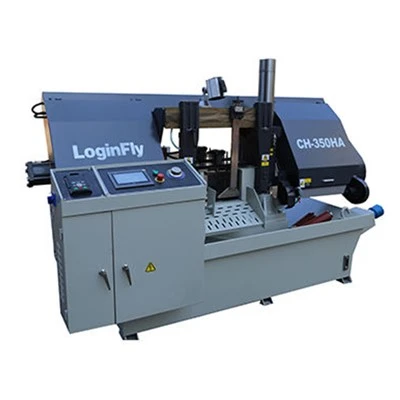
If you’re tired of dealing with saws that break mid-job, or get stuck with the wrong tool for the job, hit us up. We don’t do high-pressure sales, we just connect you to the conventional circular saw power setup that fits your workflow. Whether you’re a one-man carpentry crew or a 10-person metal fabrication shop, we’ve got the options to get you cutting right, no guesswork.
Metal Cutting Band Saw Reference:
- "Electric Motor Types and Applications for Power Tools", Power Tool Industry Association, 2022.
- "Conventional Circular Saw Design and Power Requirements", Journal of Woodworking and Metal Fabrication Machinery, 2021.
- "Hydraulic Power Tools for Construction Sites", National Association of Construction Equipment, 2023.
Shanghai Loginfly Sawing Technology Co., Ltd.
As one of the most professional conventional circular saw machine manufacturers and suppliers in China, our products have good reputation in the market. We warmly welcome you to wholesale premium conventional circular saw machine from our factory. If you have any enquiry about cooperation, please feel free to email us.
Address: Room 506 NO.655 Yinxiang Road,Nanxiangtown,Jiading District, Shanghai.China
E-mail: sales01@loginfly.com
WebSite: https://www.loginflysaws.com/
