Last month, I stood in our shipping dock, watching a pallet of freshly stamped automotive chassis parts get loaded onto a delivery truck bound for a local EV assembly plant. By the time the driver hit the highway, I was already mentally running through the checklists I’ve iterated over 12 years of running our stamping parts supply business: have the parts been secured correctly? Did we account for the temperature swings the trailer will face? Will the wiring harness stamping parts inside the crate shift and scratch each other? That day, we caught a tiny dent in a control arm bracket after delivery—a flaw that could have delayed the plant’s line by 90 minutes, which is the kind of ripple effect you don’t want in just-in-time (JIT) automotive production. For anyone in the stamping parts game, whether supplying legacy gas-powered vehicles or EVs, transportation isn’t just moving metal from Point A to Point B—it’s the make-or-break step that can turn a perfect stamping run into a production holdup. Today, I want to pull back the curtain on the most common transportation headaches I’ve seen (and fixed, and still sometimes troubleshoot) when moving automotive and EV stamping parts, from the clamps on our loading docks to the potholed back roads that throw your well-laid plans off. Automotive & EV Stamping Parts
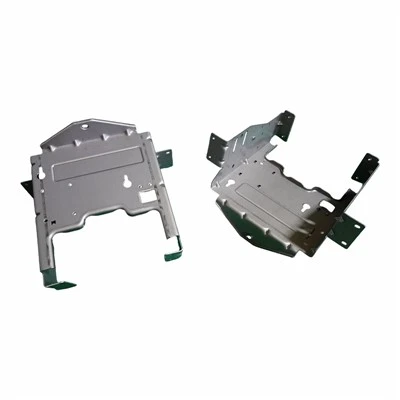
The first big problem that plagues every stamping shipment, regardless of vehicle type, is part-specific damage from poor packaging design. I don’t mean just throwing parts in a box—this is about matching packaging to the unique quirks of stamped metal, which ranges from thin, fragile EV busbar stamping parts (they’re as delicate as sheet glass, but a lot more expensive) to thick, heavy chassis crossmembers that weigh 50+ pounds each. Early on in my business, we learned this the hard way: we supplied a batch of battery terminal stamping parts to a startup EV maker, and their delivery driver stacked the parts in a single, unmodified plastic crate with no internal dividers. By the time we got a panicked call that 12% of the terminals had bent tabs, we realized those tabs were sticking out just enough to catch on the edges of adjacent parts during transit. Legacy automotive stamping parts often have simpler geometries, but EV parts are a whole new beast here: high-voltage busbars, for example, are precision-stamped with tolerances as tight as 0.1mm—any scratch, bend, or misalignment during transit can make them unfit for installation. Most suppliers cut corners on packaging to save a few bucks on materials, but that’s a short-sighted move. We now use custom foamed polyethylene inserts for every part, with cutouts sized to the exact millimeter of each stamping, and we never stack busbar or terminal parts more than two layers high—even if the crate can fit four. It’s not cheap, but it’s saved us from thousands in rework and, more importantly, lost client trust.
Next up: dynamic load shift during transit, which is a silent killer that doesn’t show up until the client unloads the shipment. Stamped parts are heavy, and when a truck brakes sharply, hits a pothole, or takes a turn too fast, loose parts slide, bang, and scratch each other. For legacy parts like door hinges or suspension brackets, a surface scratch is sometimes repairable with a touch-up coat, but for EV powertrain parts, that scratch can be a failure point. EV manufacturers run hyper-strict quality checks on every component that goes into a battery pack or motor, even tiny marks on a stator lamination stamping can cause electrical resistance that shortens the motor’s lifespan. I once had a client reject a full shipment of stator laminations because they shifted during a cross-country haul, leaving 30% with edge chips. The root cause? We’d used standard steel banding to secure the pallet, which wasn’t enough to hold individual crates tight when the trailer bounced over rocky mountain passes. Now, we use non-slip pallet mats between every layer, and we add heavy-duty plastic corner protectors to each crate, then secure them with both steel banding and vertical stretch wrap that’s tightened to a specific tension level—enough to keep the crate from moving, but not so tight it deforms the stamped parts’ edges. It’s a small adjustment, but it’s cut load-shift damage claims by 85% for us over the last five years.
Temperature and humidity fluctuations are another underdiscussed problem, and they hit EV parts particularly hard. Stamped metal parts for both gas and EV vehicles can corrode if exposed to moisture during transit, but EV parts that work with high-voltage electricity have an extra layer of risk: corrosion on a battery terminal or connector can lead to electrical overheating once installed. Even for parts that seem corrosion-resistant, like galvanized steel chassis stamping, prolonged exposure to high humidity (say, a truck sitting in a rain-soaked parking lot for 24 hours) can cause white rust, a powdery residue that’s impossible to sand off without ruining the part’s protective coating. I learned this lesson after a shipment to a plant in the Pacific Northwest last winter: our driver got stuck in a snowstorm, and the trailer wasn’t climate-controlled, so the crates of brake line stamping parts absorbed moisture. By the time they reached the plant, 10% had white rust, and the plant refused them. That experience led us to two big changes: first, we now wrap every individual crate in a vapor-permeable plastic film that keeps moisture out but allows any trapped condensation to escape, and second, we only use climate-controlled trailers for parts that will sit in transit for more than 12 hours, or for any EV powertrain parts regardless of transit time. We also add desiccant packets rated for 200 cubic inches to every crate—small, cheap step that prevents most humidity-related damage, and it’s never cost us more than the rework on that bad shipment we lost years ago.
Then there’s the JIT delivery pressure that’s unique to automotive production, and it turns transportation delays into a supply chain nightmare. Both legacy and EV plants operate on tight JIT schedules—for example, an assembly plant might need a pallet of engine valve stamping parts at 7 a.m. sharp, or their line has to shut down, which costs thousands of dollars per minute in lost production time. For EV plants, that pressure is even higher, because many are scaling production and don’t have extra warehouse space to hold buffer parts. Last year, a client that’s a top EV maker had a line shutdown because a shipment of battery tray stamping parts arrived two hours late, after a truck got stuck in a construction zone on the interstate. The cost of that shutdown was estimated at over $2 million, and while it wasn’t our fault (the trucking company’s route was messed up), it put us on notice that transportation reliability isn’t just about delivering on time—it’s about delivering at the exact minute the plant needs the parts. To fix that, we started working with two dedicated trucking partners who specialize in heavy automotive parts, and we build in a two-hour “buffer window” for every delivery, so even if there’s a minor delay, we can notify the plant in advance and adjust their schedule. We also track every shipment in real time, with GPS updates sent directly to our logistics team, and if a driver hits a traffic jam, we re-route them or send a backup truck within an hour—something that’s saved our clients from shutdowns, and kept us as a trusted supplier.
Wait, I’d be remiss not to mention the problem of overhandling during intermediate transit steps. A lot of suppliers use third-party logistics (3PL) providers who move parts between warehouses or cross-docking centers, and each time a crate is moved, there’s a chance for damage. We once had a shipment of roof rail stamping parts get scratched at a cross-dock when a forklift driver dropped a pallet, because the crate wasn’t marked clearly as fragile automotive parts. For EV parts, this is even riskier: high-voltage parts require special handling protocols, and a forklift driver who’s not trained on EV components might load a crate incorrectly or stack it on top of something heavy. We’ve solved this by clearly marking every crate with bright, durable labels that say “EV HIGH-VOLTAGE PARTS” or “FRAGILE STAMPED METAL” depending on the part, and we only work with 3PL providers that have staff trained specifically in handling automotive stamping parts—no general freight teams allowed. That small training step has cut overhandling damage by more than half for us.
Now, as I look ahead to the future of EVs, there’s a new transportation problem on the horizon that’s only going to get bigger: size and weight of EV stamping parts. As battery packs get larger and chassis structures get bigger to accommodate longer ranges, stamping parts like battery enclosures are growing to the size of a small dining table, and weighing 200+ pounds each. Moving these parts requires special equipment—like forklifts with high weight capacities, flatbed trailers with reinforced sides, and specialized lifting clamps that don’t scratch the stamping’s smooth surface. Last year, we tried to deliver a prototype battery enclosure stamping to an EV startup, and the standard forklift they used couldn’t reach the crate’s built-in lift points, so they tried rolling it manually, which scratched the enclosure’s outer panel. We had to re-stamp the part, which cost us two weeks of lead time and a lot of extra work. Now, we work with the client ahead of time to confirm the lifting equipment they have on site, and we include custom lift points in every stamping design for large EV parts—so clients don’t have to improvise when unloading. That’s a collaboration step most suppliers skip, but it’s essential for parts that big.
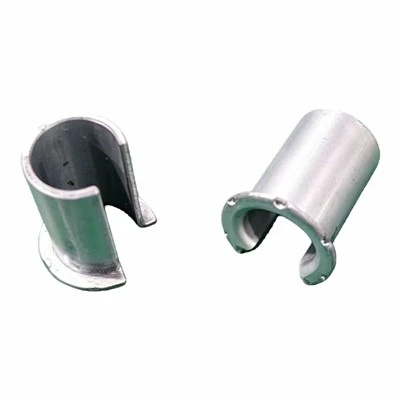
At the end of the day, transportation for automotive and EV stamping parts isn’t just a logistics task—it’s an extension of the quality control we do in our stamping presses. We spend hours making sure each stamp has the right tolerance, the right finish, and meets every client’s specifications, and it would be a shame to have a perfect part get damaged because we cut corners on how we move it. I’ve been in this business long enough to know that the best suppliers don’t just sell parts—they solve problems, and transportation is one of the biggest problems our clients face. If you’re an automotive or EV manufacturer looking for a stamping parts supplier that cares as much about getting your parts to you in perfect, on-time condition as they do about stamping them correctly, don’t hesitate to reach out to our team to discuss your project, requirements, and how we can support your production goals.
Transfer Dies & Tandem Dies References:
Automotive Industry Action Group (AIAG). (2021). Advanced Product Quality Planning (APQP) for Stamped Metal Parts. AIAG.
International Organization for Standardization (ISO). (2022). ISO 16949: Quality Management Systems for Automotive Production and Service Parts. ISO.
Electric Power Research Institute (EPRI). (2023). Quality Standards for EV Powertrain Components. EPRI.
Dongguan Changdong Tool & Die Co., Ltd.
With abundant experience, we are one of the most reliable automotive & ev stamping parts manufacturers and suppliers in China. Please feel free to buy advanced automotive & ev stamping parts made in China here from our factory. Good service and quality products are available.
Address: No. 56-B, Fumin South Road, Dalang Town, Dongguan City, Guangdong Province, China
E-mail: sales@stamping-die.com
WebSite: https://www.metalstampingdie.com/
