If you’ve ever tightened a blender blade assembly, twisted a coffee maker’s water reservoir into place, or adjusted the temperature dial on a vintage oven, you’ve used a stamping part with knurling—those ridged, patterned surfaces that give your fingers grip when smooth metal would slip. As a home appliance stamping parts supplier, I see knurling as one of those tiny, often-overlooked details that can make or break a product’s user experience, not to mention its durability and brand reputation. Too many of my customers come to me with complaints: “The knob slips after three months,” “The drawer pull feels sharp enough to scratch a kid’s hand,” or “The knurled fastener in our refrigerator ice maker stripped when a service tech tried to replace the filter.” Each of these issues traces back to one thing: misaligned knurling quality requirements. Today, I want to break down exactly what those requirements are, why they matter for home appliances specifically, and how we as suppliers make sure we hit them every time. Home Appliance Stamping Parts
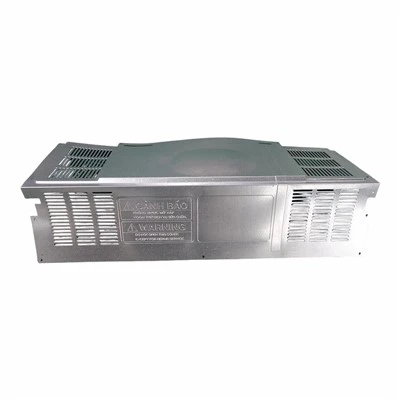
First, let’s start with what knurling even is, for anyone who’s not a stamping engineer. Knurling is a manufacturing process (usually done cold, right before or after stamping) that cuts or forms a patterned texture onto a flat or cylindrical metal surface. For home appliance stamping parts, the most common knurling patterns are straight, diamond, or cross-hatch—think of the texture on a screwdriver handle, but precise enough to fit a $500 coffee maker. The key here is that home appliances live in a unique environment: they’re used daily, often by people who don’t read instruction manuals, exposed to moisture, soap, food residue, and temperature swings from freezing in a freezer to baking in an oven. A knurled part for a washing machine control knob, for example, has to withstand being twisted with wet, soapy hands, while a knurled bolt holding a dishwasher spray arm has to resist rust from being submerged in hot water. That context is non-negotiable when setting quality standards.
The first non-negotiable requirement is dimensional consistency. This isn’t just “it looks like the pattern we wanted”—it’s measurements that are repeatable part after part, because if one knurled knob is half a millimeter too short, it won’t sit flush against the appliance’s plastic fascia, and a next one has ridges that are too sharp, it’ll dig into a user’s thumb. For home appliance stamping parts, we measure two core dimensional specs: pitch and depth. Pitch is the distance between the center of one knurl ridge to the next. For most appliance knobs and fasteners, we target a pitch of 0.8mm to 1.2mm—small enough to give grip, but not so tight that food or gunk gets trapped between ridges. If pitch is off by more than 0.05mm, we start seeing problems: too wide apart, and fingers slip; too close, and the texture feels abrasive. Depth is the height of each knurl ridge from the base surface. For stamping parts, depth is usually 0.2mm to 0.5mm, depending on the part’s size. A common mistake suppliers make is making depth too shallow—less than 0.15mm—and the knurling wears off after a few uses. I once had a customer come back with a batch of oven control knobs that had no knurling left after six months of use; we traced it to a supplier setting depth to 0.12mm to save material, which was way too low for the oven’s frequent twisting.
Next, surface finish and texture uniformity, split into two parts: the actual roughness of the knurled surface, and the way the pattern lines up. Surface roughness is measured in Ra (average roughness) values. For home appliances, we require an Ra of 1.6 to 3.2 micrometers. If Ra is higher than that—meaning the ridges are too rough, or have tiny burrs from stamping—users will complain of “sharp edges” or “scratchy texture.” If Ra is lower than 1.6, the surface is too smooth, and grip is lost, especially when hands are wet. Uniformity is also key here. If you have a diamond knurled pattern, each diamond has to be the same size and angle. I’ve seen parts where one diamond was slightly lopsided, or the cross-hatch pattern was off by 5 degrees, and when assembled, the knob looked uneven, made a grinding sound when twisted, and felt uncomfortable to use. For parts that are visible, like front-loading washer control knobs, we also have a cosmetic requirement: no missing ridges, no deformed areas, and no discoloration from the stamping process. A small missing ridge on a front-facing knob is enough to make a customer think the product is low-quality, even if it works perfectly.
Then there is material compatibility and durability, which is where most non-appliance-specific knurling standards fall short. Home appliances have extreme use cases that test knurling more than, say, a automotive part that’s only used occasionally. Let’s take knurled fasteners: a part that holds the filter in a refrigerator, for example, has to be twisted on and off every month by average users—no special tools, just hand pressure. If the knurled ridges aren’t hardened enough, they’ll strip or round out after a dozen uses. For stamping parts made from common appliance metals—stainless steel, cold-rolled steel, or galvanized steel—we require a surface hardness of HRC 28 to 35 for knurled areas. That’s done through a process called cold working during knurling itself, because when you press the knurling tool into the metal, it work-hardens the surface automatically. But if the metal is too soft, like annealed aluminum that wasn’t hardened enough, that work-hardening doesn’t happen, and the knurling wears quickly. We once had a project for a small countertop ice maker, where the customer wanted to use lightweight aluminum for the control knob to cut cost. We adjusted the knurling depth and tool pressure to work-harden the aluminum surface enough, so the knurling lasted through 10,000 twists—way more than the average ice maker’s lifespan of 5 years.
Resistance to environmental factors is another big one, specifically corrosion and contamination. Home appliances are in damp kitchens, laundry rooms, and bathrooms. A knurled part for a dishwasher, for example, will be exposed to hot water, detergent, and food debris. If the knurling has tiny gaps or is made from a metal that rusts, those gaps will trap water and lead to rust, which then spreads to the surrounding plastic or other metal parts. For knurling on parts that touch water, we require that the pattern doesn’t have undercut areas that trap water—so straight knurling is often better than diamond knurling here, because diamond knurling has small pockets that can hold moisture. We also test for salt spray corrosion for 48 hours, which mimics the humidity and small amounts of salt in kitchen environments. If a knurled part starts to rust after that test, it’s not acceptable for home appliance use. Contamination is another factor: food, dust, or detergent can get stuck in knurling ridges, which is a hygiene issue for items like coffee makers, blenders, and food processors. That’s why smooth, uniform knurling with no sharp edges is important—there’s nowhere for gunk to hide, so users can easily wipe the part clean.
Functional fit is the final key requirement, and it ties all the above together. Knurling isn’t just for grip; it has to work with the rest of the appliance’s design. For example, a knurled knob has to align with the appliance’s fascia so it doesn’t stick out or sit too far in. A knurled screw has to thread into its mating part correctly, without the knurling catching on other parts during assembly. We test for assembly ease: a batch of 100 knurled parts should all install in under 10 seconds each, with no parts jamming or requiring extra force. If even 2% of parts jam during assembly, that’s a quality issue that will slow down the customer’s production line and increase their costs. We also test for long-term functional performance: a control knob’s knurling should still provide grip after 10,000 twists, and a knurled drawer pull should still hold tight after 5,000 open-and-close cycles.
As a home appliance stamping parts supplier, I’ve learned over 15 years that knurling is never an afterthought. It’s a small part, but it’s the first thing a user interacts with when they start using an appliance. If the knurled knob slips when twisting the oven’s temperature dial, the user might think the oven is broken. If the knurled filter fastener in the dishwasher strips, a user might return the whole appliance. That’s why we don’t just follow generic knurling standards—we tailor them specifically to the needs of home appliances. We work closely with our customers’ design teams early in the process, not after the parts are made, so we can adjust knurling depth, pitch, pattern, and hardness to fit their product’s use case, material, and budget. Whether it’s a cheap toaster or a high-end smart refrigerator, the knurling quality has to meet the same strict standards: grip that lasts, no sharp edges, resistance to wear and corrosion, and perfect fit.

If you’re a home appliance designer, engineer, or procurement manager looking for a stamping parts supplier that gets knurling (and every other detail of your parts) right, we’re here to help. We’ve partnered with dozens of top appliance brands to deliver consistent, high-quality knurled parts that meet all the requirements for durability, functionality, and user experience. Reach out to our team to discuss your next project, and we’ll work with you to develop the perfect knurling specifications for your stamping parts.
Electronic Stamping Parts References
- DIN 82:1975, Knurling Tools and Rollers; Terms and Designations
- ASME B94.11M-1993, Knurling
- ASTM B117, Standard Practice for Operating Salt Spray (Fog) Apparatus
- Home Appliance Manufacturers Association (HAMA), 2022 Standard for Stamped Metal Parts for Residential Appliances
Dongguan Changdong Tool & Die Co., Ltd.
With abundant experience, we are one of the most reliable home appliance stamping parts manufacturers and suppliers in China. Please feel free to buy advanced home appliance stamping parts made in China here from our factory. Good service and quality products are available.
Address: No. 56-B, Fumin South Road, Dalang Town, Dongguan City, Guangdong Province, China
E-mail: sales@stamping-die.com
WebSite: https://www.metalstampingdie.com/
